
Flying Car InteractionDesigning Trust Across the Drive–Fly Transition
A VR study of the moment a car becomes an aircraft, built with Jiayi Chen at Georgia Tech’s Sonification Lab. The question: what makes a rider trust a vehicle that changes what it is, mid-trip.
The riskiest moment is the handoff
We built a VR city where a car drives the streets, pulls into a VertiSpot, an urban pad for takeoff and landing, climbs to a flyway thirty feet up, then lands and keeps driving. The goal was never to look futuristic. It was to find what keeps a rider calm while the vehicle changes what it is.
“How might we build trust, comfort, and engagement in vehicles that switch between driving and flying?”
Trust breaks before the wheels leave the ground
Trust research has a simple rule: people rely on a system only as much as it shows them what it’s doing (Lee & See, 2004). A flying car breaks that rule twice, once on the ground, once in the air. We needed to know exactly where.
Sense
How riders read safety while the car moves from driving to flying.
Feedback
Which cues, visual, audio, haptic, keep a rider feeling in control mid-transition.
Role
What changes between driving it and riding in it, and what road automation can teach aviation.
What road and cockpit systems already prove
Rivian’s hands-free driving is smooth and predictable, closer to the calm handoff flying cars need than Tesla FSD, which still demands constant supervision and can turn abrupt. Super Cruise’s driver monitoring and the Boeing 787’s head-up display say the same thing: show people what the system is doing, and keep them in the loop.
Ride it, then study what breaks
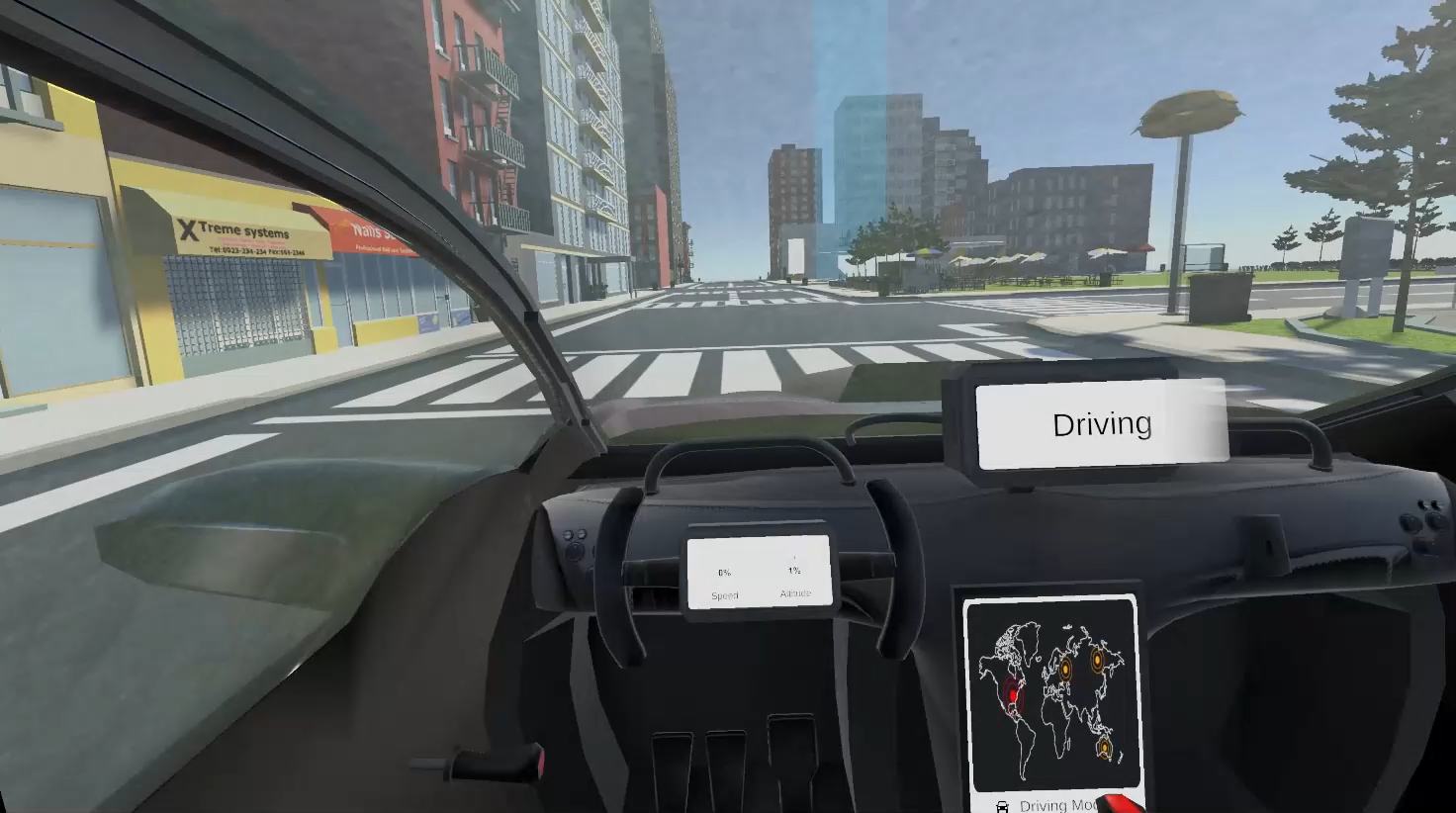
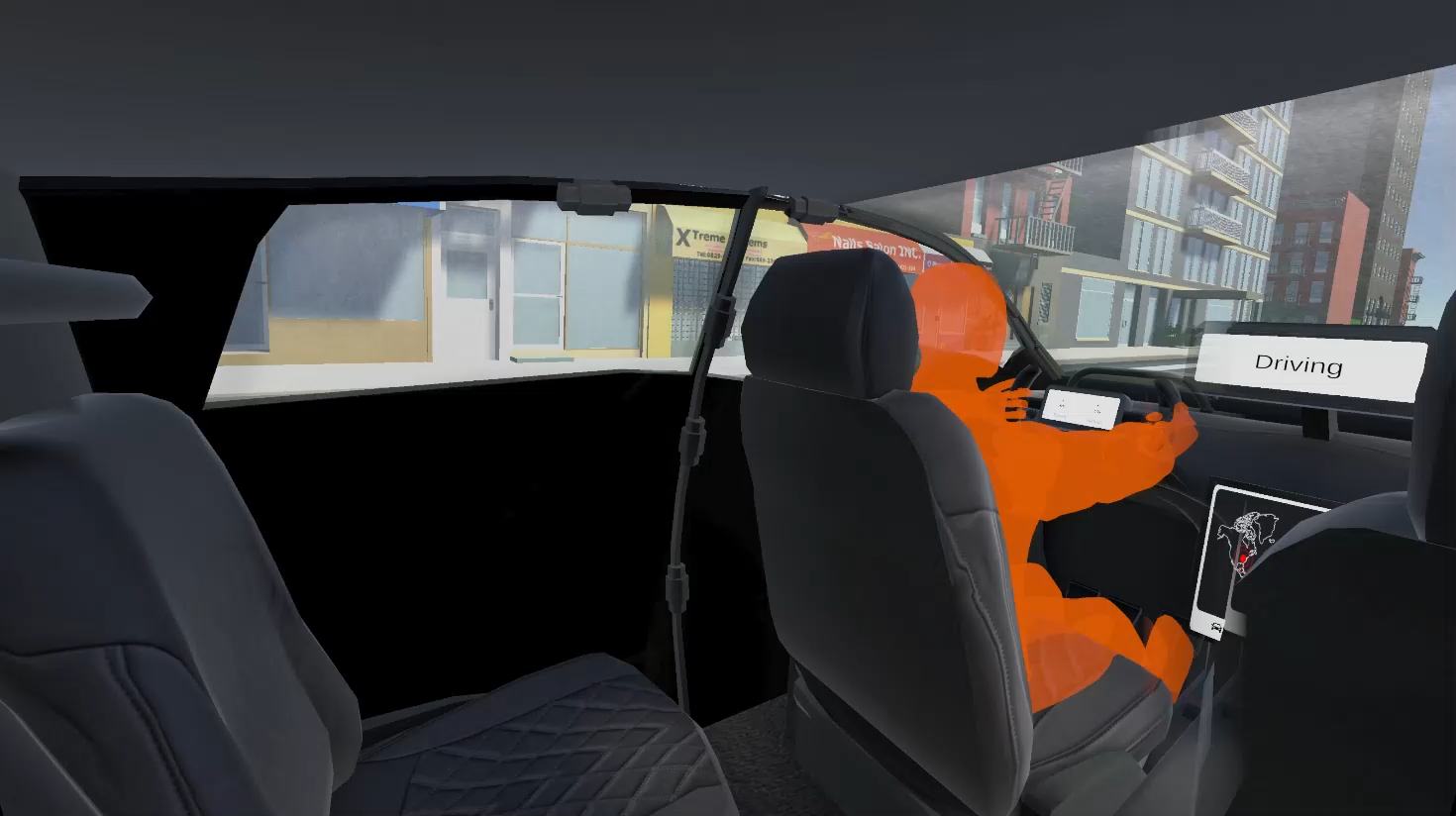
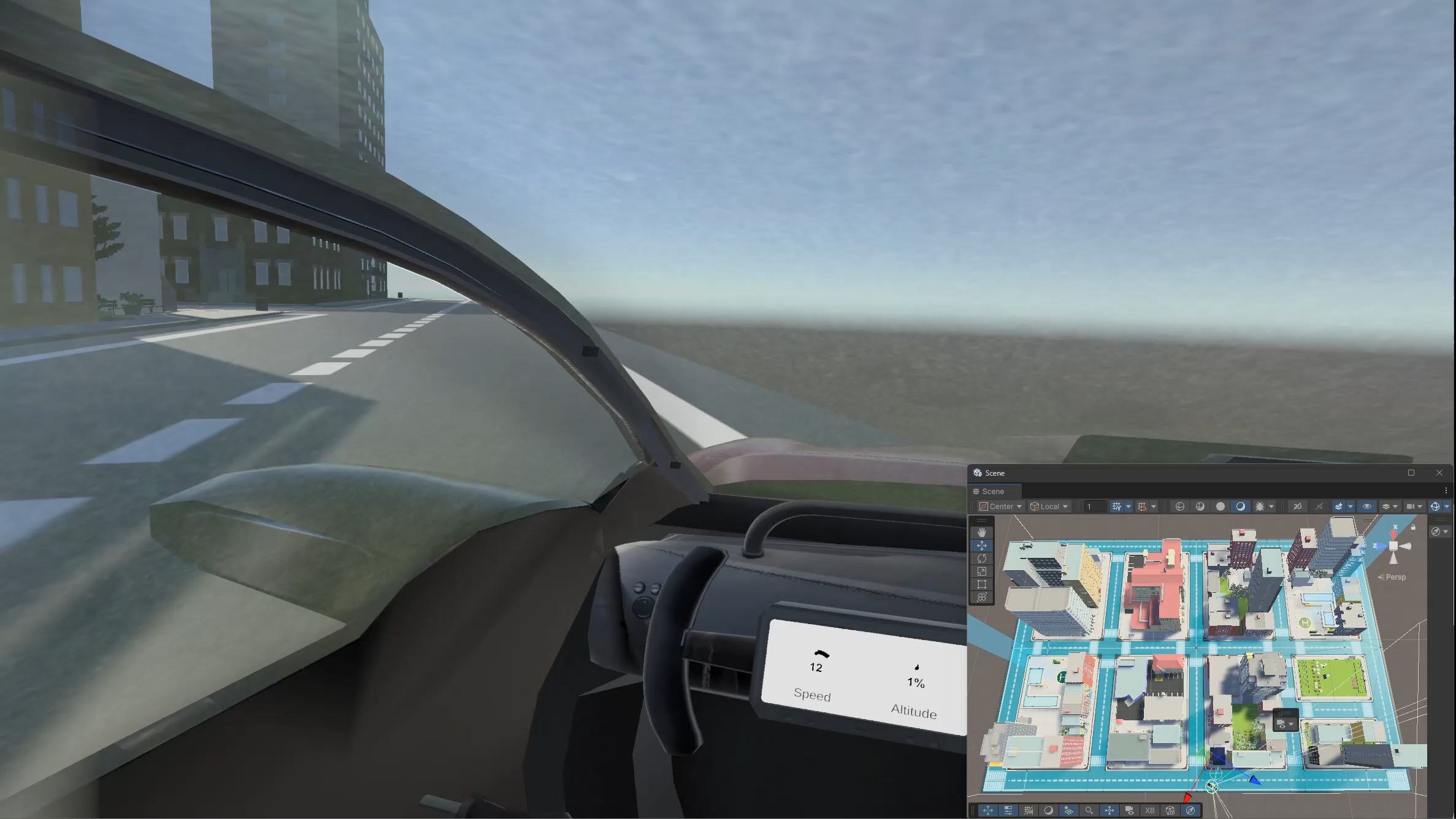
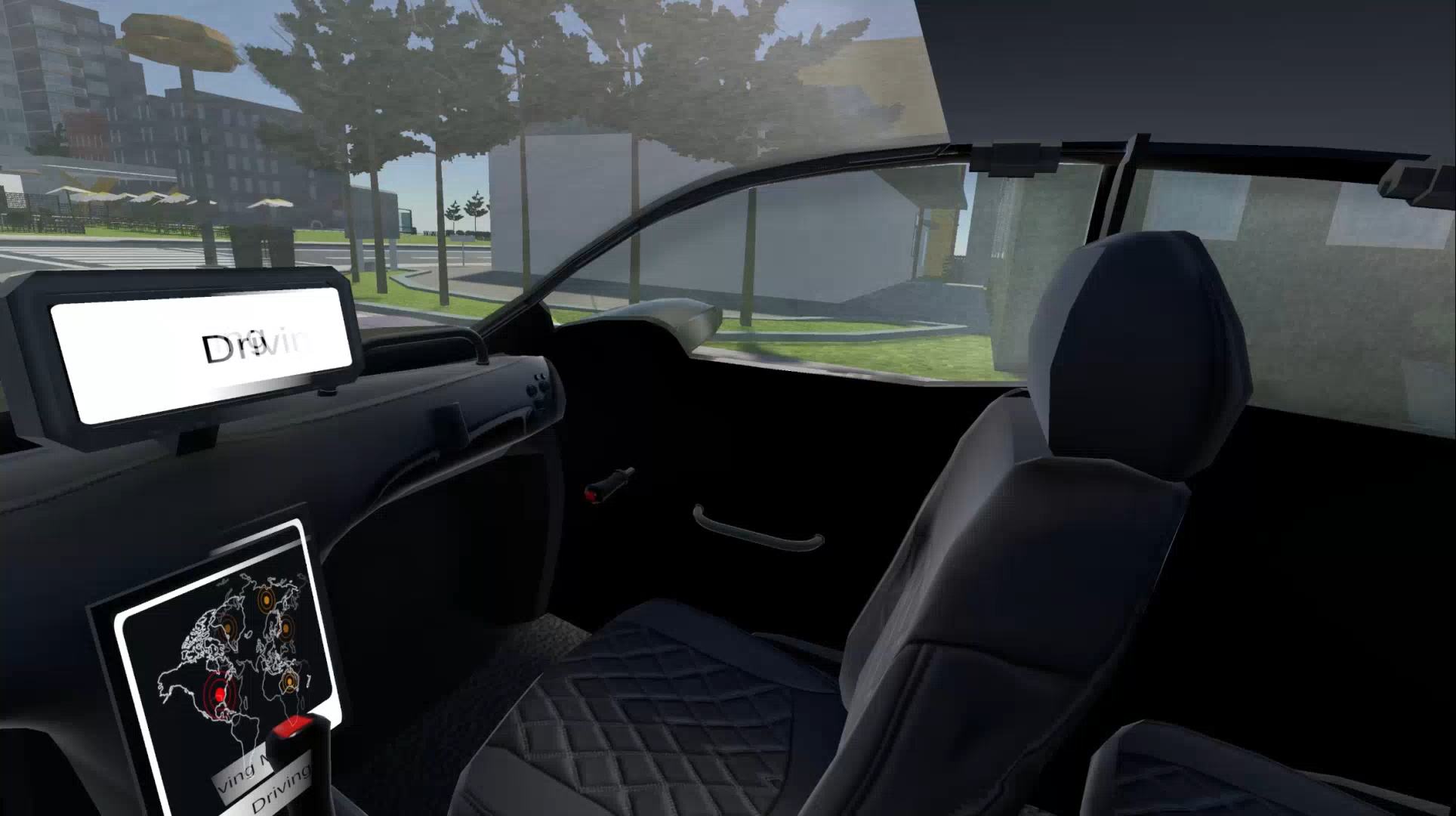
We ran three scenarios: drive it yourself, ride as a passenger next to a visible driver avatar, or fly it with a game controller. We watched how people reacted to every mode shift, then asked them about comfort, trust, and risk.
Building a test bed that didn’t exist yet
The old Unity build ran on a paid replay library and undocumented features we couldn’t maintain. We rebuilt it on SteamVR for Meta Quest, HTC Vive, and Valve Index: a new render pipeline, every interface element redone for the headset, and a boundary system to keep riders inside the play space and the car.
NavMesh couldn’t drive a car. It ignored lanes and traffic rules, so we scripted the routes by hand instead. Then we built a record-and-playback system: drive it once, replay it for every participant, so everyone saw the same ride.
Driver: fully engaged, mentally taxed
Trust hit 9 out of 10 on the ground, then dropped right before takeoff.
Passenger: more relaxed, more immersive
Trust landed at 7.5. A visible driver avatar beat an empty seat every time.
Controller: least risky, least real
Felt like a game. Scored the lowest on feeling real.
“Trust rose when someone else was visibly in command, and fell when the participant drove or used a controller, since those roles felt closer to a simulation than a ride.”
People asked the vehicle to talk, not go quiet
Across sessions, one pattern held: predictability beat spectacle, and people wanted more signals, not fewer.
Predictability beats spectacle
Riders wanted transitions signaled clearly and played out slowly. A sudden lane change with no warning killed trust fast.
More signals, not fewer
People kept asking for speed, a predicted path, a confidence score for the system. Even a basic map helped them feel oriented.
Visible control builds trust
A driver avatar, steady cues, and a smooth handoff built confidence. A silent one left people confused and uneasy.
Cues matter more than graphics
A lighting shift or a directional cue did more for realism than better textures ever did.
Design recommendations
- Signal every mode change with light, sound, or haptic feedback.
- Show clearly whether the person or the system is driving.
- Explain upcoming decisions before they happen.
- Let passengers choose how much feedback they receive.
What it actually took
Reading trust research. Rebuilding a VR platform from scratch under real constraints. Running a study across three roles. Then turning raw notes into interface rules for a vehicle category that doesn’t fully exist yet.
“A vehicle earns trust the same way a person does: by showing its intentions before it acts.”
What I’d measure next
- Biometric signals such as heart rate and skin conductance during each transition, not just self-report.
- Voice explanations of the system’s next move, given ahead of time.
- Deliberate failure scenarios, to see exactly where confidence breaks.
- A real risk-perception scale (Walpole & Wilson, 2021), to separate fear of flying in general from fear of this vehicle specifically.